Spring in Jacksonville hits differently. While most of the country is still shaking off winter layers, North Florida is already deep in full bloom — azaleas firing up, live oaks shedding their catkins, and pine forests releasing dense yellow clouds that coat every horizontal surface in sight. Your car, your porch furniture, your windowsills… and, most critically, your entire roof drainage system.
What the average homeowner doesn’t realize is that spring isn’t just the most beautiful season in Jacksonville — it’s also the most damaging one for the infrastructure quietly working to protect your home from water. And ignoring what’s happening up on that roofline can easily cost you thousands in preventable repairs.
What Pollen Actually Does to Your Drainage System
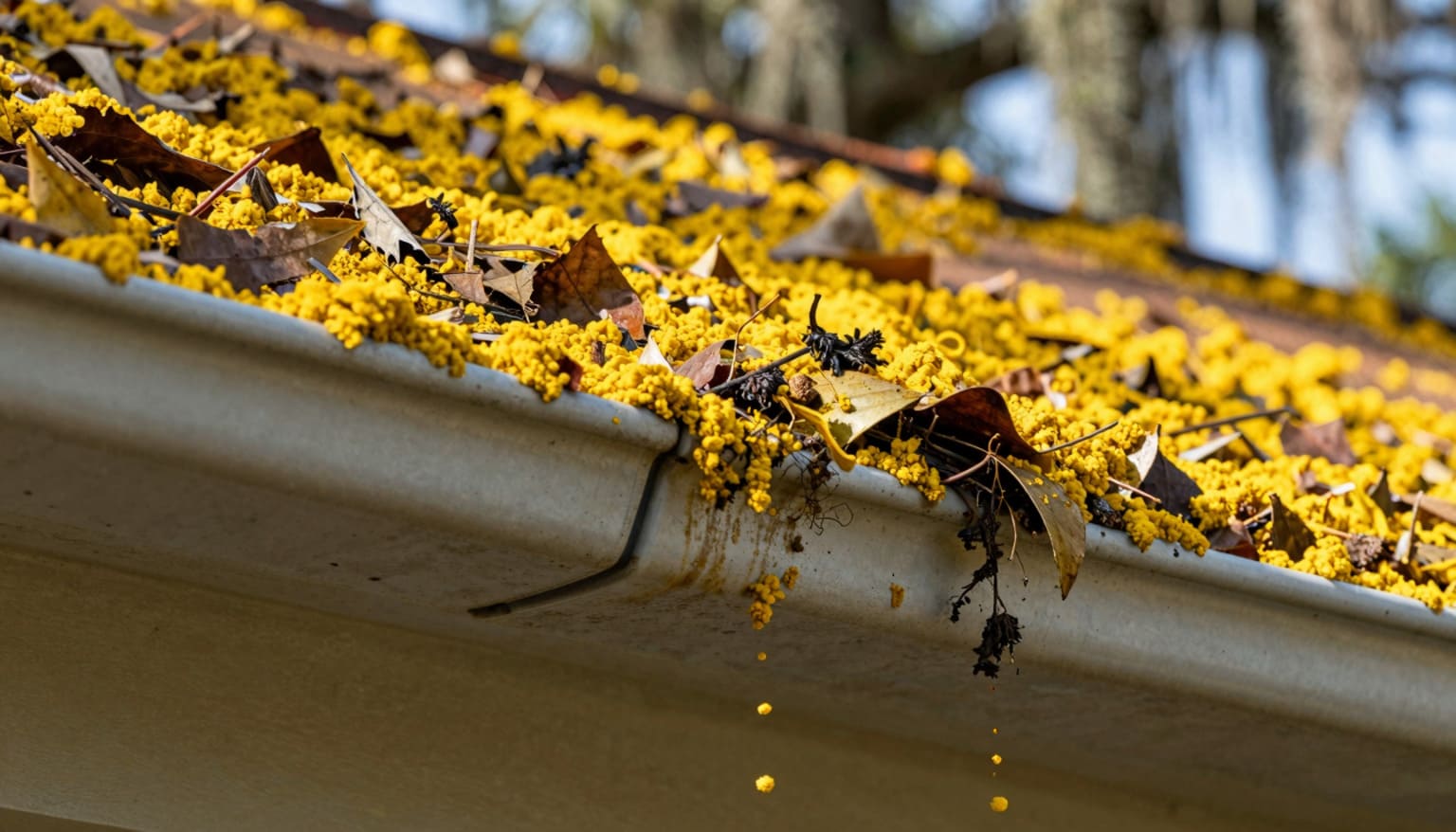
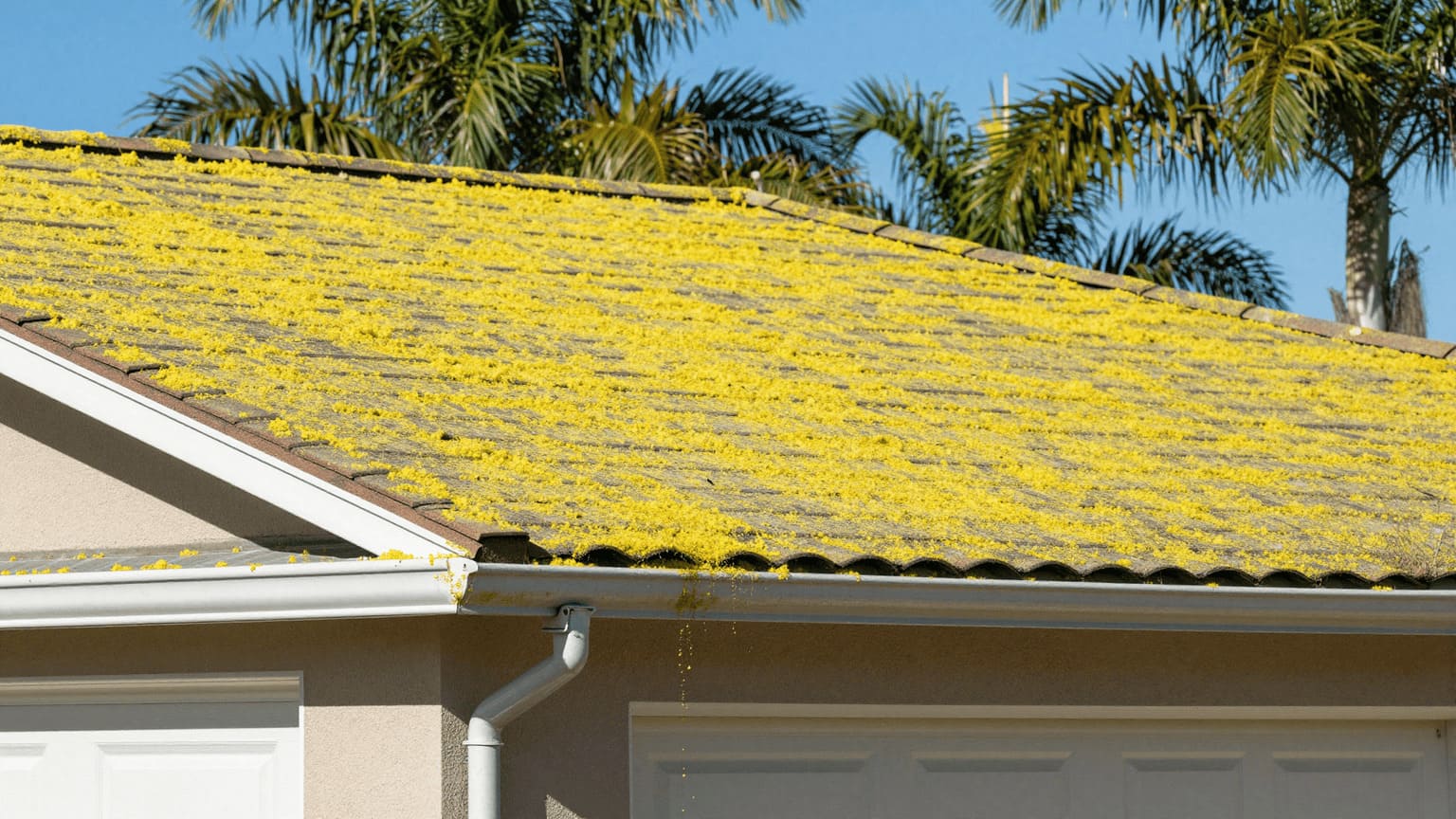
Florida’s pollen season typically begins as early as February and runs well into May. Unlike in northern states, there’s no hard freeze to slow down tree budding cycles. Live oaks alone — one of the most dominant species across Duval, St. Johns, and Clay counties — can release billions of pollen grains in a single season. Layer on top of that the contributions from cedar, pine, and Bahia grass, and you have a near-constant atmospheric deposit of fine particulate matter landing on every square inch of your roof.
Pollen doesn’t just sit there looking pretty and yellow. The moment the first spring rain arrives, it mixes with water and becomes something far more problematic: a dense, sticky paste that bonds with twigs, leaves, Spanish moss fragments, and any organic debris already resting in your rain channels. This paste doesn’t wash out with light rainfall — it compacts, it hardens in the Florida sun between showers, and it builds up layer by layer until proper water flow is restricted or completely blocked.
That’s when things start to go wrong in very specific, predictable ways:
- Overflow along the front edge of your drainage trough — sending water directly down your exterior walls
- Moisture intrusion behind fascia and soffit boards, leading to rot and structural softening
- Standing water creating ideal breeding conditions for mosquitoes (a genuine public health concern in North Florida)
- Water pushed back under roofing materials, resulting in interior ceiling leaks
- Soil erosion and landscaping damage along your home’s foundation
- Excessive weight on aging or improperly secured channels, causing sagging and detachment
That list isn’t theoretical — it’s what The Gutter Guys crews encounter at homes across Jacksonville, Ponte Vedra, Fleming Island, and Orange Park every single spring, without exception.
This is precisely why investing in proper gutter protection before the season peaks is one of the smartest decisions a Jacksonville homeowner can make. A quality micro-mesh filter system keeps pollen, catkins, and organic debris out of your drainage channels entirely, while allowing rainwater to flow freely and efficiently — the way the system was designed to work.
The Oak Catkin Problem: Spring’s Most Underrated Villain
Pollen doesn’t act alone. Spring in North Florida also means live oak catkins — those long, stringy yellow-green clusters that shed from trees in massive quantities over just a few weeks. These catkins are the drainage system’s worst enemy. They’re thin and wispy enough to slip right past basic open-top designs, yet fibrous enough to mat together and form a near-impenetrable plug inside your rain channels after just a single heavy downpour.
Jacksonville averages over 52 inches of rainfall annually — and spring delivers a significant portion of that total. When you combine high rainfall volume with clogged channels, you’re essentially testing the weakest points of your home’s water management system under full hydraulic pressure. That water has to go somewhere. And it usually picks the least convenient — and most expensive — direction.
At The Gutter Guys, we install LeafBlaster Pro® as our primary leaf and debris barrier: a 100% stainless steel micro-mesh system backed by a 40-year warranty, professionally fitted to your existing seamless aluminum drainage channels. It’s engineered specifically to handle the kind of seasonal debris load that North Florida throws at homes year after year. Unlike cheaper plastic alternatives, it won’t warp under the Florida sun, won’t corrode from tannin-rich oak runoff, and won’t require annual replacement.
Time to Act: Why Spring Inspection Can’t Wait
If your rain channels haven’t been looked at since last fall, spring is your moment of truth. By mid-April, most Jacksonville homeowners have already experienced multiple significant rain events — and pollen-laden water has been running through (or over) their drainage systems for weeks. If the channels weren’t clear going in, the situation is almost certainly worse now.
The Gutter Guys serve homeowners across the greater Jacksonville area and throughout North Florida — from Nocatee and St. John’s to Green Cove Springs, Atlantic Beach, Middleburg, and Fruit Cove. Our team handles everything from full seamless aluminum channel installations to targeted repairs on sections that are sagging, leaking, or pitched incorrectly.
Warning signs that your drainage system is already overwhelmed? Look for water spilling over the front edge during rainfall, dark staining streaking down exterior walls, soft spots or discoloration around fascia boards, or pooling water along your foundation after a storm.
Don’t wait for June. Jacksonville’s summer thunderstorm season brings intense, fast-moving storms that will test every weakness in your system — and fail anything that’s already compromised. Spring is the window to get ahead of it.
Schedule your free estimate with The Gutter Guys today, and let’s make sure your roof drainage system is ready for whatever Florida has planned next.