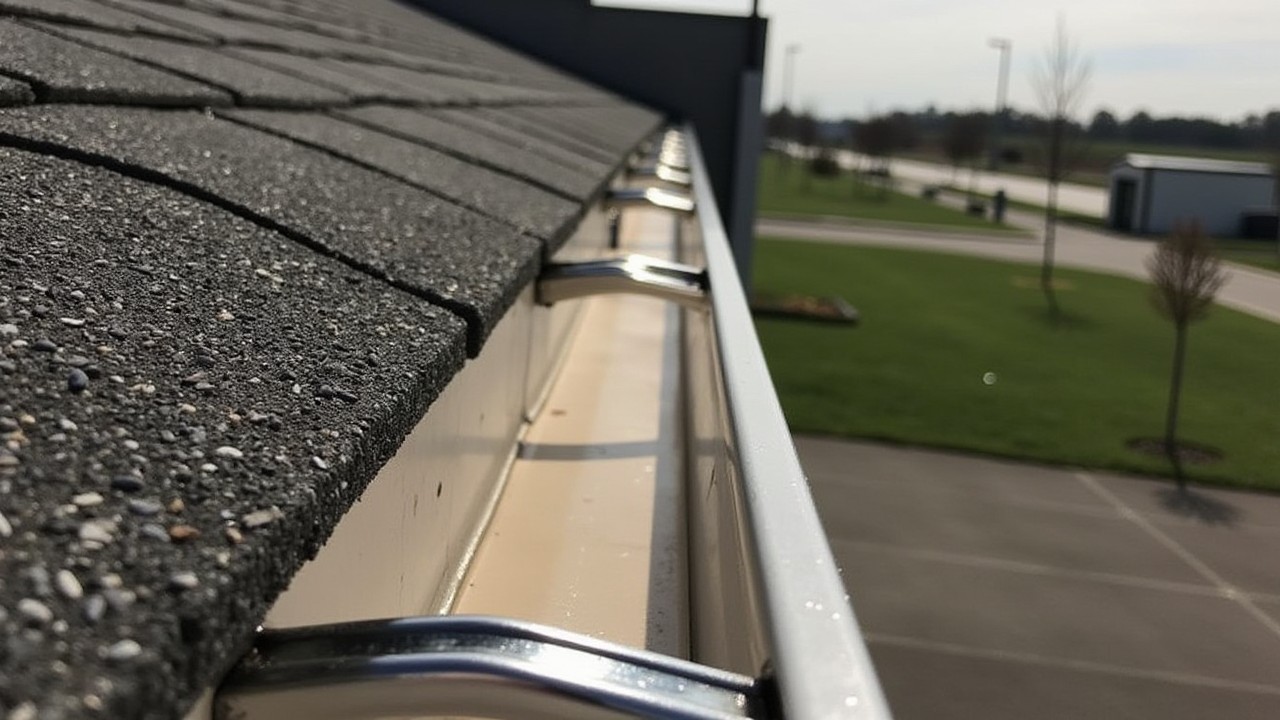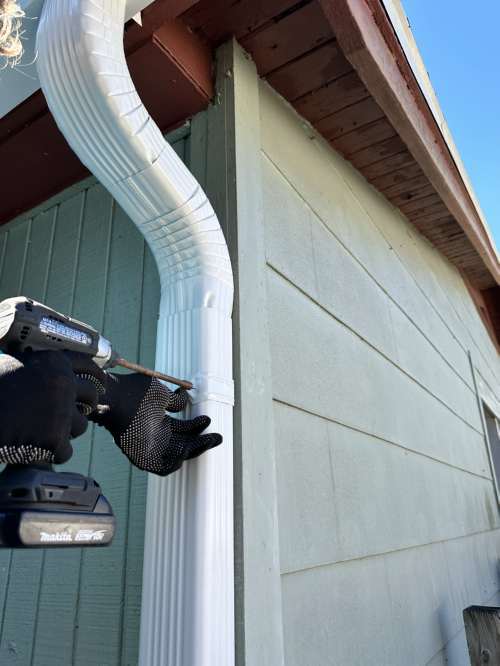
A faint brown streak below the gutter may not look urgent. Then paint starts lifting, a soffit panel sags, and the next storm sends water behind the roof edge. Florida’s heavy rain and humid air can turn a small drainage problem into widespread damage. Timely fascia and soffit repair in Jacksonville helps homeowners fix the affected materials while identifying where the water entered.
Why the roof edge is vulnerable
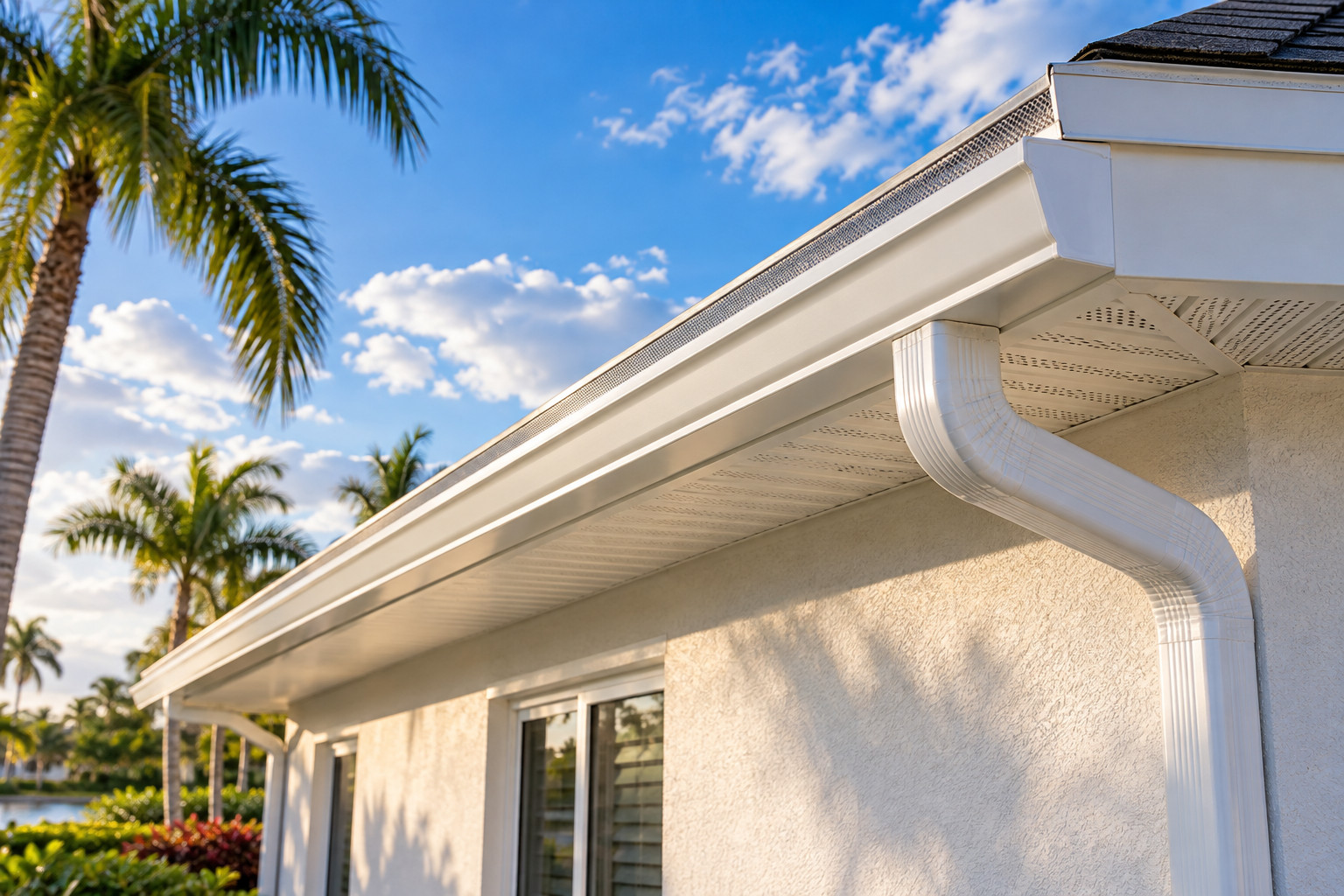
Fascia is the trim board along the roof’s lower edge; it often supports the gutters. Soffit covers the underside of the overhang and, when vented, helps air move through the attic. Together they protect a surprisingly busy junction of roofing, framing, and drainage. When water gets behind one piece, the neighboring parts may stay damp long after the rain ends.
Common causes of fascia and soffit water damage
The problem is not always a roof leak. In many Florida homes, water enters from the gutter line or reaches the overhang on a windy day.
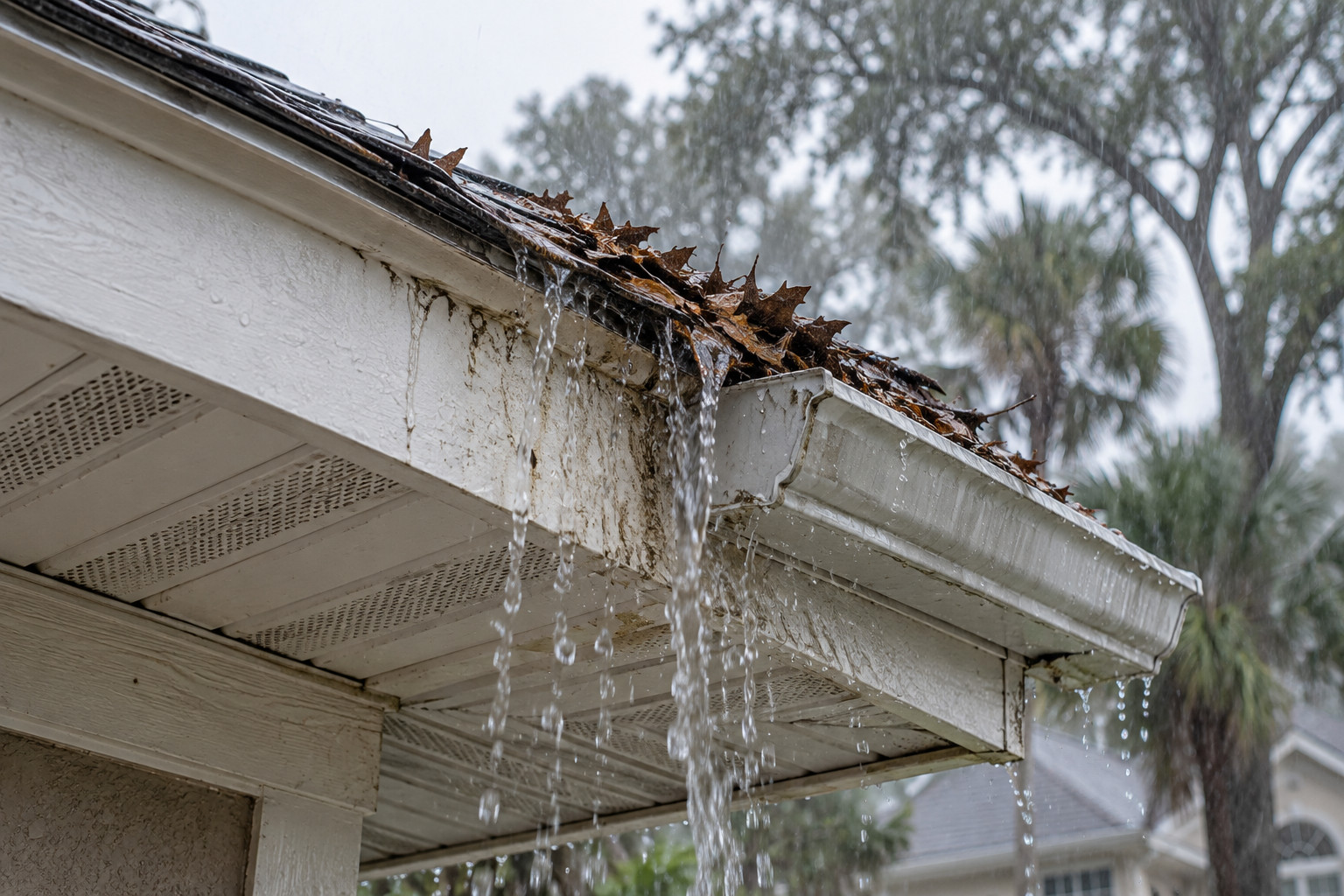
- Clogged gutters: Leaves, pine needles, and roof grit block flow, forcing runoff over the back or front edge.
- Poor gutter pitch or loose fasteners: Standing water and sagging sections can repeatedly soak the fascia.
- Faulty flashing or roof-edge details: Missing or poorly fitted drip edges may let runoff slip behind the gutter.
- Wind-driven rain: Strong gusts can push water into open soffit joints or dislodge panels, exposing the attic.
A fresh coat of paint will not solve these conditions. The water’s route needs to be corrected first.
Warning signs you should not ignore
Look up at the eaves after a downpour, then check again once everything should have dried. Persistent changes tell a different story from a one-time splash.
- Paint that blisters, peels, or leaves dark streaks below a gutter run.
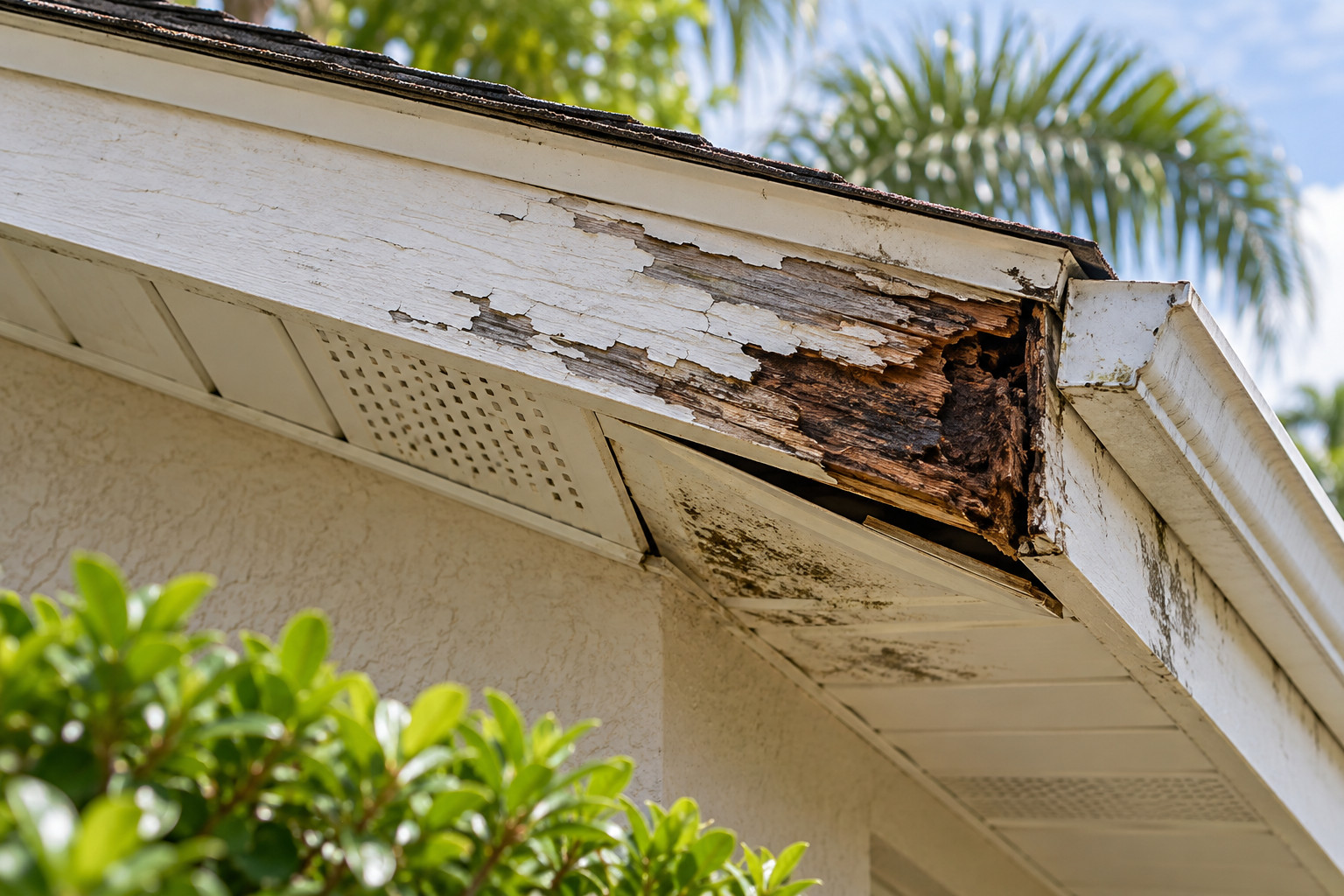
- Soft, swollen, split, or crumbly wood at corners and gutter attachment points.
- Warped soffit panels, open seams, rust marks, or sections pulling away.
- Musty odors near the attic, damp insulation, or stains on upper interior ceilings.
An isolated stain may be cosmetic, but paired symptoms deserve attention. A loose gutter attached to softened fascia, for example, is both a moisture issue and a falling-object risk. Do not pull on suspect boards to test them.
The pattern offers clues: marks directly below a single gutter section suggest overflow, while a new gap after high winds suggests a displaced panel. Neither reveals the condition of the wood hidden behind the finish.
How to prevent damage in Florida
Build a roofline routine around the weather rather than waiting for a leak. Inspect from the ground before the summer rainy season and after severe storms; use a qualified professional for elevated work.
- Keep gutters and downspouts clear, and check that water exits away from the house.
- From a safe spot during rain, watch for overflow, dripping behind gutters, or uneven drainage.
- Have loose hangers, failed seams, roof-edge flashing, and displaced soffit panels repaired promptly.
- Keep soffit vents unobstructed; damaged ventilation panels should be replaced without sealing off needed airflow.
On homes surrounded by trees, more frequent debris checks may help. Gutter guards can reduce buildup, but they still need inspection and cleaning. Neither guards nor new trim can compensate for a badly pitched or undersized drainage system.
Also remember that metal or vinyl cladding may look sound while the wood underneath remains wet. Covering a stain with caulk or paint without checking the substrate can leave that moisture trapped.
Repair the cause, not just the stain
Small localized damage may allow a targeted repair; soft or extensively deteriorated boards may require replacement. A proper assessment should examine the fascia, soffit, gutters, flashing, and nearby roof edge as one connected system. It should also check whether any wet attic materials need attention.
The Gutter Guys serves Jacksonville and surrounding North Florida communities with fascia, soffit, and gutter services. If you notice recurring overflow, loose panels, or rotten trim, request an inspection before another storm makes the problem harder to contain.